Closing the distance is the moment you’ve been waiting for, but going from different cities to sharing a bed overnight comes with surprises. Here’s what to expect once you’re no longer long distance, and how to make the adjustment easier.
You might think that everything will be ‘fine and dandy’ once you’re no longer long distance.
But it’s likely going to be much more challenging than you’re expecting it to be.
Adapting to a new life together takes a lot of:
- Time
- Effort, and
- Compromise
I learned the hard way, that’s why I put together these insights so you’re much better prepared.

Transitioning From a Long Distance Relationship to Local: The Learnings
1. The holiday mood is over: differences become more frustrating
Every time you see your sweetheart when you are in a LDR, it feels like a long- awaited holiday. You meet them once in a while (sometimes in different destinations every time). You are not experiencing what people in a regular relationship do.
Then one of you moves.
Suddenly, you are under the same roof, sharing the bed, cooking food and socializing together. There will be pleasant surprises you will discover about your partner, and some annoying ones, too.
When I moved in with my man, he was pleasantly surprised that I can cook well. He had the impression I was a girl who was spending her evenings in a bar.
Well, I used to do that… because I had no one waiting for me at home. But when I moved I had a lot more time and inspiration for cooking. Except… I was a great chef who doesn’t eat meat. I never considered that his love of Turkish kebab might be an obstacle for us, and this caught us both by surprise.
It wasn’t a huge obstacle, but even today we feel bad when ordering the food in the restaurant. We want to share the food, but we can’t.
2. No one is perfect: you need to accept some frustrations with the amazing parts
When you are in a long distance relationship, you tend to think about your partner in superlatives. While you’re far apart it’s easier to focus on all the amazing things about them.
When you move, the distant admiration suddenly switches to real communication full of day-to-day interactions, which grows into a routine. Your partner is amazing, and you will continue loving them, but you will discover (or remember) that they have flaws just like everyone else. You have to learn to accept them as they are.
3. Your communication rhythms and patterns must change when you move from online to offline
While apart, you adapt to planned FaceTime date nights and constant texting, accompanied by long-awaited reunions. You master that kind of communication and you get used to that rhythm.
When you start living together, you suddenly start interacting face to face about everything.
Most of this is great. There is a huge advantage in being able see the person when you talk to them (and everyone knows by now that arguments in Whatsapp don’t end well!).
However, you might find yourself not knowing what to do when you get upset. In a LDR, you can just delay replying to their message until you calm down. Or you can think carefully about what you want to say in that email. You don’t have that sort of time and space when your partner is standing two feet away.
Overall, this is great: arguments will be shorter and make up sex will be one hug away! BUT, you have no time to rethink your answers… you become real, unpolished you.
Pro tip: For those of you still in long distance relationships: Do not try to be someone else before closing the distance. It will only be easier when the time comes to live together.
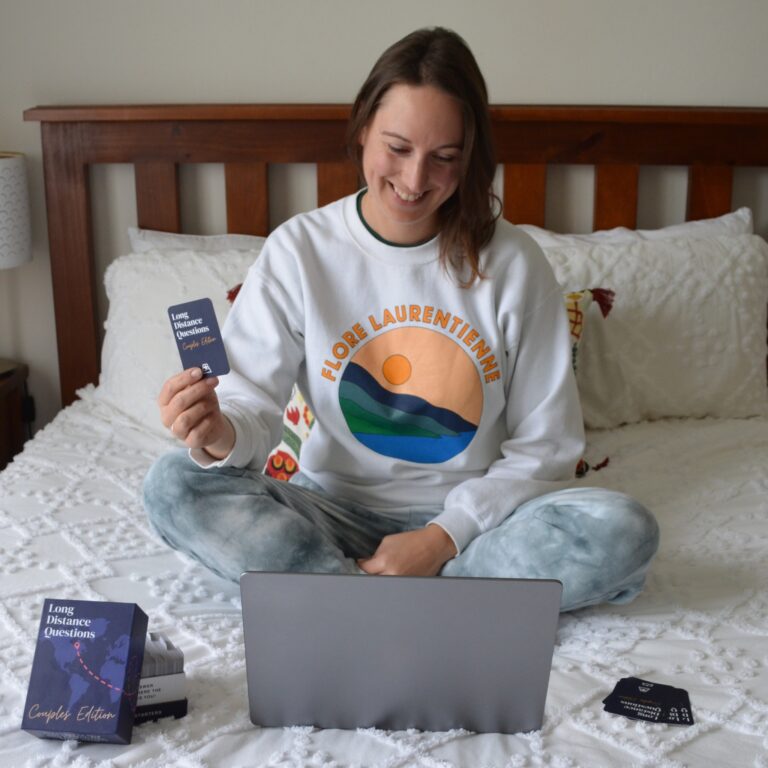
4.97/5, loved by 1000s of couples
Feel the miles melt away, one question at a time
150 thought-provoking questions made for long distance couples.
Go deeper than “how was your day” and really get to know each other: the stories, the dreams, the little details.
Find out more4. You must adjust to having much less private space: socially and physically
When you are apart and almost your entire relationship is online most people find some perks. And although we can hate having to do everything alone, we get used to it. In fact, you probably start enjoying some parts of doing life alone. It can even become scary when you think about moving in together, SHARING everything, and having much less privacy.
Remember, closing the gap doesn’t mean you have to start spending all your time together. Initially, you might feel tempted to do so, but it will put a lot of pressure on both of you.
Don’t be afraid to find separate friends, or find and attend social activities by yourself. Don’t feel committed to do something because your partner does it. My man and I value our personal space a lot, and I think we equally enjoy going out with our friends, doing different sports, and attending different social events if we want to.
Slowly form a life which is comfortable for both of you. But don’t think that closing the distance requires you to stick together 24/7. In fact, it’s better if you don’t.
5. The challenges of learning to live in a new place will compound the adjustment challenges that come with learning to live together
The biggest difficulty I faced when I moved was that suddenly I felt I was just someone’s partner.
I had moved to new countries before, and it used to feel like ultimate level of freedom. Even though I was on my own and facing challenges of being in a new country, I used to love it. I felt independent, free, and ready to conquer the world!
This was different. I felt like I had lost my own identity and become just someone’s partner.
This phase didn’t last for too long (I was actively attending interviews and going to the fairs or events and trying to make contacts and friends), but it was the biggest challenge I had to overcome personally. The thought that I used to have a good job, tons of friends, a house, and independence… then left it all be behind me, was constantly crunching me from inside.
This particular challenge is much harder for the person who makes the move, but there are quite a few things you can do to ease the negative feelings:
Things To Do To Make It Easier Adjusting After a Long Distance Relationship
- Never use the fact that you were the one who moved for them as a weapon during arguments. NEVER count miles walked, flights taken, money spent for them. They did a lot for you, too. It was your decision and they will do their best to help you settling down, but they’re not directly responsible for creating your social life in a new destination.
- Do your homework in advance: prepare your CV and start applying for jobs as you are planning your move.
- Gather some savings so that you don’t feel too financially dependent on your partner during this adjustment phrase.
- Try to start making your own friends by participating in social activities, workshops, courses, sport activities etc.
- Consider living apart at the beginning. I can’t personally speak to this. When we closed the distance, our relationship advanced enough to live together. That’s why we closed the distance at the first place. However, if you want to enjoy a dating phase, do that. It might work for you.
- Make sure you have responsibilities in your new city (even around the house) to give your days some structure.
6. Having different expectations
Having different expectations which don’t get met might be the main reason for frustration and growing apart while living together. To avoid that, be as open and honest as possible. Discuss all the aspects that bother or worry you before one of you moves.
This is not time to be nice, it’s time to be open with each other. Keep in mind that closing the gap is the first step towards spending the rest of your life together.
Make sure you both are okay with each other’s perspectives on all sorts of things. They will probably be very different, and that’s totally fine, as long as you can accept your partner’s idea of the future (if you want to get married within the next couple of years but your partner is not interested in ever getting married before you move is the time to know that sort of stuff).
So TALK openly about your expectations before you make this decision to move. There is a chance one of you will get hurt, but it’s much better than one of you changing your entire life for something you expected, but didn’t get.
7. There are HUGE advantages
Let’s end by celebrating the good stuff!
The happiness of waking up together. How much easier solving arguments is. Having peace of mind because neither of you have to take a flight tomorrow/next week/next month.
The excitement of:
- Creating your new home
- Slowly discovering your lover as a life partner
- Building up your new professional and personal life
- Learning A new language
- Being able to hug whenever you feel like
- Calling them without a prior arrangement
- Being physically there for them during tough moments, and
- Spending those lazy Sundays together
Make your own list. It will help you navigate and deal with any challenges.
How to Adjust When You’re No Longer in a Long Distance Relationship
Level 1: Relax
Just because it’s harder than you expected doesn’t mean it isn’t right.
You may have built up a beautiful fantasy in your mind about what it would be like when you’re finally together. Even if that’s not how it turns out, you weren’t necessarily wrong about your partner all along.
Step back and give each other time to work out the kinks.
Level 2: Communicate
Tell your partner how you’re feeling and listen to them.
Discuss things you’re loving about being back together and things you’re finding difficult. Talk about how the partner who has moved is finding the transition. Make sure you’re communicating as well as you did when you were apart.
Email them if you have to!
Level 3: Don’t be selfish
While apart, you get to spend more time doing whatever you want. It takes some adjusting when you also need to think about the needs and desires of another person.
This is true of any relationship, but it can sneak up on you if you’ve been together for a long time and you think you’ve already sorted out any major issues.
Remember that you may need to treat it more like a new relationship as you blend your lives back together.
Level 4: Try something new together
You will both be used to your separate routines. In addition to including each other in old routines, form some new ones together.
- Take up a sport neither one of you has tried before.
- Make a point of visiting a new restaurant or cooking a meal together each week.
- Sign up for a class together.
Level 5: Allow each other to grow
Chances are good that the experiences the two of you had apart made an impact on you. Don’t demand that your partner be exactly the same as they were before.
You will both continue to change throughout your lives together. Celebrate your partner’s growth and share your own.
If you have grown too far apart, time will make it clear, so don’t rush any big decisions (the week after you reunite is probably not the time to call it quits). And of course, enjoy the people you have become.
You’ve paid your dues now and, if you’re like us, it has been worth it.
What You Will Only Learn Once Your Relationship is No Longer Long Distance
One of the greatest benefits is that long distance couples become practiced at learning about each other without being physically together.
The distance forces you to learn a lot about someone through good communication and visits when possible.
However, there are some things that you can’t really until after closing the distance. Here are five things you only really get to know when you’re up close and personal…
Household Habits
Are they a neat freak, a slob, or somewhere in between? What are their quirks when it comes to their possessions and their space?
Anyone who has ever had a roommate knows how much differing levels of cleanliness can affect a relationship. In a long distance relationship, it is much more difficult to figure out how your partner cares for their space on a regular basis.
Couples who don’t live together but reside in the same city can tell whether their partner tends to clean up or lets the dishes pile up. But when someone has company, especially long distance company, chances are they’re going to clean up before their significant other arrives.
During your visits, particularly if they are infrequent, you are likely seeing your partner on their best household behavior. It takes popping by when you live in the same city (or in the same home) to really understand what your partner’s household habits are.
Downtime Behavior
How does your partner recharge their “batteries for life?” How do you recharge yours?
It is harder to know how your partner responds to having people around during their downtime when you are long distance. So, it’s important to remember that people recharge in different ways.
For example, my husband occasionally plays computer games and watches UFC and YouTube to relax. I like to read internet forums about publishing and doom-scroll social media. We both have introverted tendencies and don’t always want to have someone plopping down on the couch to cuddle when we’re trying to recharge.
When we haven’t seen each other in a long time, as it was during our three and a half years of long distance, we were much more likely to be “on” all the time while we were together. Now that we actually live together, we’ve needed to learn how to respect each other’s downtime while still enjoying our life together.
We are much happier existing side by side now that we’ve learned how to read each other a bit better.
Mood Nuances
Long distance couples who communicate well can become uncannily good at interpreting their each others’ moods. They can pick up hints from facial expressions on webcam, tone of voice, and even typing and texting speed.
No matter how good they are, however, they’re not picking up as much as they would be if they were sharing the same space.
The more subtle nuances of communication can be harder (or impossible) to pick up across distance. These are the sorts of things you can only sense with lots of time spent physically in the same place.
In a long distance relationship, you are sometimes limited only to tone or words or a general sense of expression. Between grainy cameras and missed connections, it can be harder to combine all the nuances of body language and words and accurately interpret the messages your partner is sending.
Scheduling Preferences
Long distance couples who make time to talk to each other may not have a fully accurate picture of what it’s like to live in the same place when it comes to scheduling activities and quality time.
Couples who end up living in the same place after a period of long distance may be surprised to find that their partner is always late, or never wants to do anything spontaneous, or has a routine that isn’t entirely compatible with having a partner.
For example, let’s say you have been living three time zones apart for a few years. When you finally move to the same city you may be surprised to find that your partner likes to go out five nights a week. While you were long distance they made a point of talking to you before then and the timing worked out perfectly because it was hours earlier there.
Even though you probably knew about this practice before, when you live in the same place it will feel different when it directly affects you. It might be a bit like being in a new relationship for a while.
Each partner will have to give a little, and they won’t know exactly how much (or what) until they live in the same place.
How much they really like your friends
During visits, many of us make a point of introducing friends and our long distance partners whenever possible.
But, chances are, the majority of your time together (both on the phone/webcam/email and during visits) will be reserved for just the two of you.
Maybe you’ll meet a group of friends for dinner when your partner is in town or go to a party together. Hopefully your friends and partner will get along well, but meeting a handful of times a year is nothing like being a regular part of someone’s life.
You spend lots of time bonding with your partner, but your friends typically do not (and vice versa). When you live in the same place you’ll begin to discover how well they really get along and how much time your friends and partner will truly want to spend together.
Can’t decide who should move? Our who should move quiz weighs up jobs, family, visas and money.
Getting ready to close the distance in the US? Compare K-1 vs CR-1 vs IR-1 to pick your visa, and see what the K-1 visa costs from start to finish.
Now It’s Your Turn
Closing the gap is so much more than moving in together. It’s also (at least) one of you leaving everything behind and moving across the country (or much further) so you can pursue happiness as a couple.
It’s exciting and little bit scary… And you know, it’s so worth it.
If you want more insights when it comes to closing the distance. We recommend joining our free LDR Support Group where you can ask questions and get advice from other long distance couples that successfully navigated becoming ‘geographically close’!
Closing the Distance FAQ
Yes. The holiday feeling of visits wears off, everyday habits start to clash and one of you is often adjusting to a new city. Most couples find the first few months the hardest. Our tips for reuniting after long distance can help.
Talk about money, jobs, where you’ll live, how you’ll split chores and what each of you needs to feel at home. Our guide to moving for a long distance relationship has the questions to ask.
When you’ve spent real time together in person, you agree on where to live and the practical side (visas, work, money) is sorted. Our visa guides show how long each visa takes, so you can set a date.

Transform your date nights
150 thought provoking questions and prompts designed for long distance couples.
Therapist approved, and made to play over video call or in person.
- Connect on a deeper, more intimate level
- Improve communication & understanding
- Learn something new each time you play
Loved by long distance couples
4.97
★★★★★
33 verified reviews
30-day guarantee
Hassle-free returns
Free US shipping
On orders $65+
Award winner
Announcement soon!
★★★★★
"The questions are intentional and thought provoking. I’m a psychotherapist and this one definitely has my stamp of approval."
★★★★★
"One card had us talking for an hour! Some of these questions got real emotional while others had us laughing!"
★★★★★
"The cards have helped us have every FT call be a deepening of our relationship. These cards have brought us closer and kept us close."
Recommended Reading